Heat Exchanger Inspection in Clarksville, TN
The heat exchanger keeps combustion gases out of your home's air. When it cracks, that's a safety issue, not a comfort issue. We inspect with cameras and combustion testing, and give you a straight, documented answer.
Documented inspections · CO testing included · Mon–Fri 7AM–7PM · 24/7 emergency dispatch
Safety First, Facts Only
What a Heat Exchanger Does, and Why It Matters
Direct answer: the heat exchanger is the metal chamber inside your gas furnace where combustion happens. Hot flue gases pass through its tubes or cells, the metal absorbs that heat, and your blower pushes household air across the outside of the metal to warm it. The critical job is separation: combustion gases on one side, your breathing air on the other. A crack can let those gases mix, which is why a compromised exchanger is treated as a safety call.
Let's keep this in proportion. Most furnaces never develop a cracked exchanger. But exchangers do fail from metal fatigue after thousands of heating cycles, and Clarksville's climate is hard on them: rapid 30-degree temperature swings in a single day, multi-day stretches in the teens each January, and damp crawlspaces near the Cumberland River that invite rust. Furnaces over 15 years old carry the most risk, which is why the exchanger gets inspected on every tune-up we perform.
When we get a call about a suspected exchanger problem, we don't guess and we don't scare. We inspect, we document, and we show you what we found. If the exchanger is healthy, you'll hear that clearly. If it's compromised, we'll explain exactly why replacement of the furnace is the recommendation, and we'll put it in terms you can verify. Our carbon monoxide safety page covers the broader CO picture for gas-heated homes.
Our Inspection Process
- Visual inspection with bright lighting and mirrors: rust, cracks, hot spots, and soot patterns.
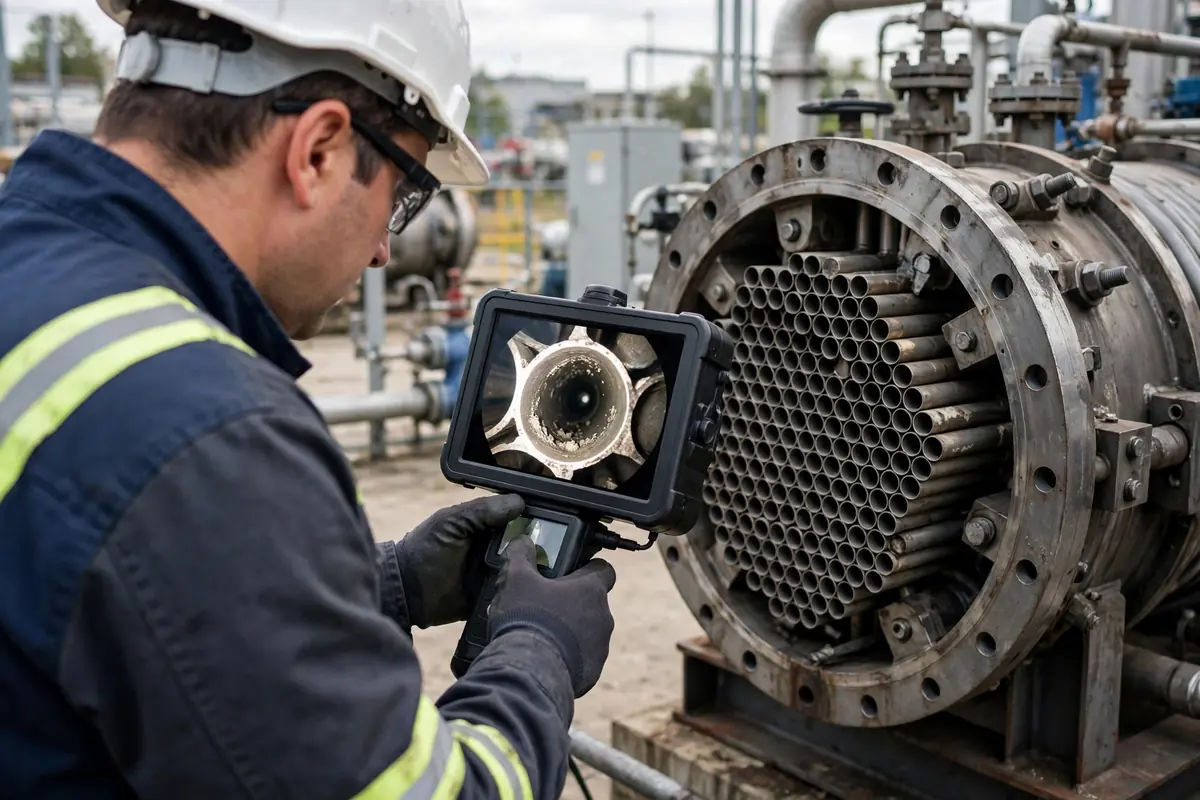
- Borescope camera inside the exchanger cells to see what the naked eye can't reach.
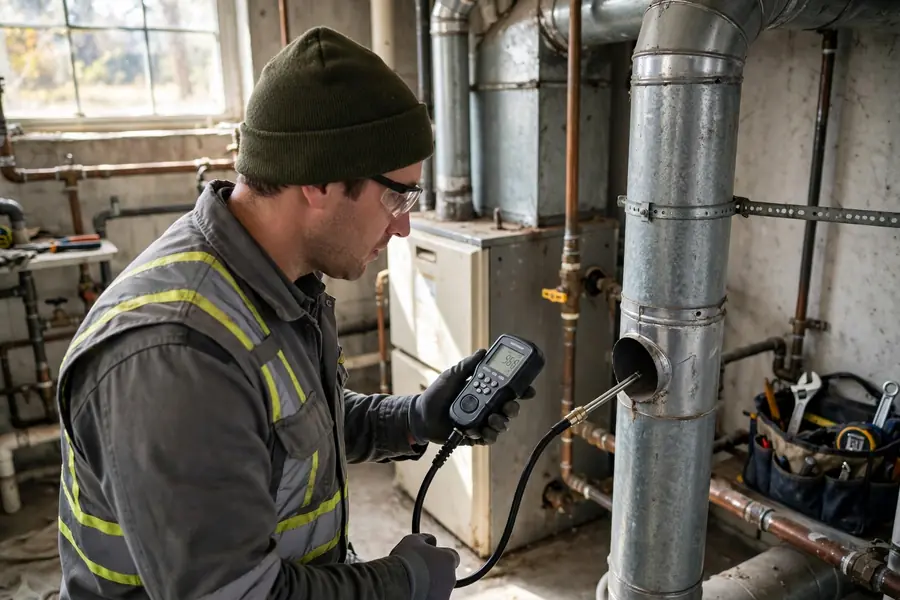
- Combustion analysis: measuring flue gas composition for signs of abnormal combustion.
- Flame observation: watching burner flame behavior as the blower starts, which can reveal exchanger movement.
- Carbon monoxide testing at the furnace and in the living space with a calibrated meter.
- Documented findings: photos where possible, and a plain-language written summary of what we found.
Warning Signs Worth Taking Seriously
No single symptom proves a cracked exchanger, but certain patterns warrant an inspection soon rather than later. A metallic or unusual smell when the heat runs. Visible rust or soot around the furnace. The burner flame noticeably flickering or changing when the blower kicks on. And any carbon monoxide detector alert, which should always be treated as real: turn off the furnace, get everyone outside, and call 911 from outside the home before calling us.
If we confirm a compromised exchanger, here's the honest part: residential exchangers aren't practically repairable. The part sits at the core of the furnace, and the labor to replace it runs close to the cost of a new unit. That's why a confirmed crack means furnace replacement. We'll show you the evidence, price both paths anyway, and let the numbers speak.
Don't Ignore These
Signs That Deserve an Inspection
Unusual smells when heating
A metallic, chemical, or "hot" smell from the vents when the furnace runs. Some odor on first fall startup is normal dust burn-off; persistent smell is not.
Visible rust, cracks, or soot
Rust streaks, visible cracks, or soot staining on or around the furnace cabinet. Soot in particular suggests abnormal combustion that needs a professional look.
CO detector alerts
Any carbon monoxide alarm should be treated as real. Get out, call 911 from outside, and don't run the furnace again until the source is found and fixed.
Upfront & Simple
How an Inspection Visit Runs
History & Symptoms
We ask what you've noticed: smells, sounds, detector alerts, and the furnace's age. Your observations guide where we look first.
Multi-Method Inspection
Visual, borescope camera, and combustion analysis together. No single method catches everything, so we don't rely on one.
CO Testing
Calibrated meter readings at the furnace, in the flue, and in the living space. Documented, not eyeballed.
Straight Answer
Healthy, monitor, or replace: you get the finding in plain language with the evidence behind it, and honest pricing for next steps.
Our Commitments
Evidence, Not Alarm
We show you what we find
Camera images and meter readings, explained in plain language. A safety recommendation you can see is one you can trust.
No fear-based selling
A healthy exchanger gets a clean bill of health, full stop. We won't invent a crack to sell a furnace.
CO testing included
Every exchanger inspection includes carbon monoxide testing at the equipment and in the home, because the two questions belong together.
Honest Pricing
How We Inspect: Three Methods, One Answer
| Method | What it finds | Its limits |
|---|---|---|
| Visual inspection | Rust, cracks, soot, hot spots on accessible surfaces | Can't see inside cells or behind baffles |
| Borescope camera | Cracks and deterioration inside the exchanger cells | Hairline cracks can still hide; interpretation takes experience |
| Combustion analysis | Abnormal flue gas readings suggesting exchanger or combustion problems | Indicates a problem exists, not always its exact location |
An inspection itself is a modest service call. What it can reveal is the expensive part: if the exchanger is compromised, replacement of the furnace is the standard recommendation, since exchanger replacement labor approaches the cost of a new unit. We'll price both paths so you can see that for yourself. Our furnace cost guide covers typical ranges, and our repair vs. replace article walks through the decision.
Where We Work
Exchanger Inspections Across Clarksville
Safety inspections throughout Montgomery County, including:
Downtown Clarksville
Historic homes with the oldest furnaces in the county. Annual exchanger inspections are the most valuable service we offer these households.
New Providence
Older homes near the Cumberland River where damp conditions accelerate rust. We check exchangers, cabinets, and venting together.
All Service Areas
See every Clarksville-area community we serve across the 37040–37044 ZIPs.
Good To Know
Heat Exchanger FAQs
What does a heat exchanger actually do?
It is the metal chamber where combustion happens. Hot flue gases pass through its tubes or cells, and the metal transfers that heat to the air your blower pushes through the house. It keeps the combustion gases separate from your breathing air, which is why its condition is a safety matter.
What are the warning signs of a cracked heat exchanger?
Possible signs include a strange or metallic smell when the heat runs, visible rust or cracks on the exchanger, the burner flame flickering or changing color when the blower starts, soot around the furnace, and carbon monoxide detector alerts. None of these prove a crack on their own, which is why an inspection matters.
Can a cracked heat exchanger be repaired?
In residential furnaces, effectively no. The exchanger is the core of the furnace, and replacing it costs nearly as much as a new unit in parts and labor. When we confirm a compromised exchanger, we recommend replacing the furnace and we show you exactly what we found so you can see why.
How do you inspect a heat exchanger?
We use a combination of methods: visual inspection with bright lighting and mirrors, a borescope camera to see inside the cells, and combustion analysis measuring flue gas composition. No single method catches everything, so we use them together and document what we find.
My CO detector went off. What should I do?
Treat it as real. Turn off the furnace, open windows if you can do so safely, get everyone (including pets) outside, and call 911 or the fire department from outside the home. Do not go back in until responders say it is safe. Then call us to find the source before the furnace runs again.
How often should the heat exchanger be inspected?
Every year, as part of a fall tune-up. Heat exchangers fail from metal fatigue over thousands of heating cycles, so age and cycle count matter more than calendar time. Furnaces over 15 years old deserve the closest attention.
Clarksville HVAC Repair Pro
Get a Straight Answer About Your Exchanger
Camera inspection, combustion testing, and CO readings, documented and explained in plain language.
Independent References
For background on how heat exchangers work, see Wikipedia's heat exchanger article, and for carbon monoxide risks, the Wikipedia article on carbon monoxide poisoning.