Common Furnace Problems, Explained in Plain Language
Find your symptom below, see what's likely behind it, and learn what to do right now. Safe DIY checks included. Anything involving gas or wiring belongs to a pro.
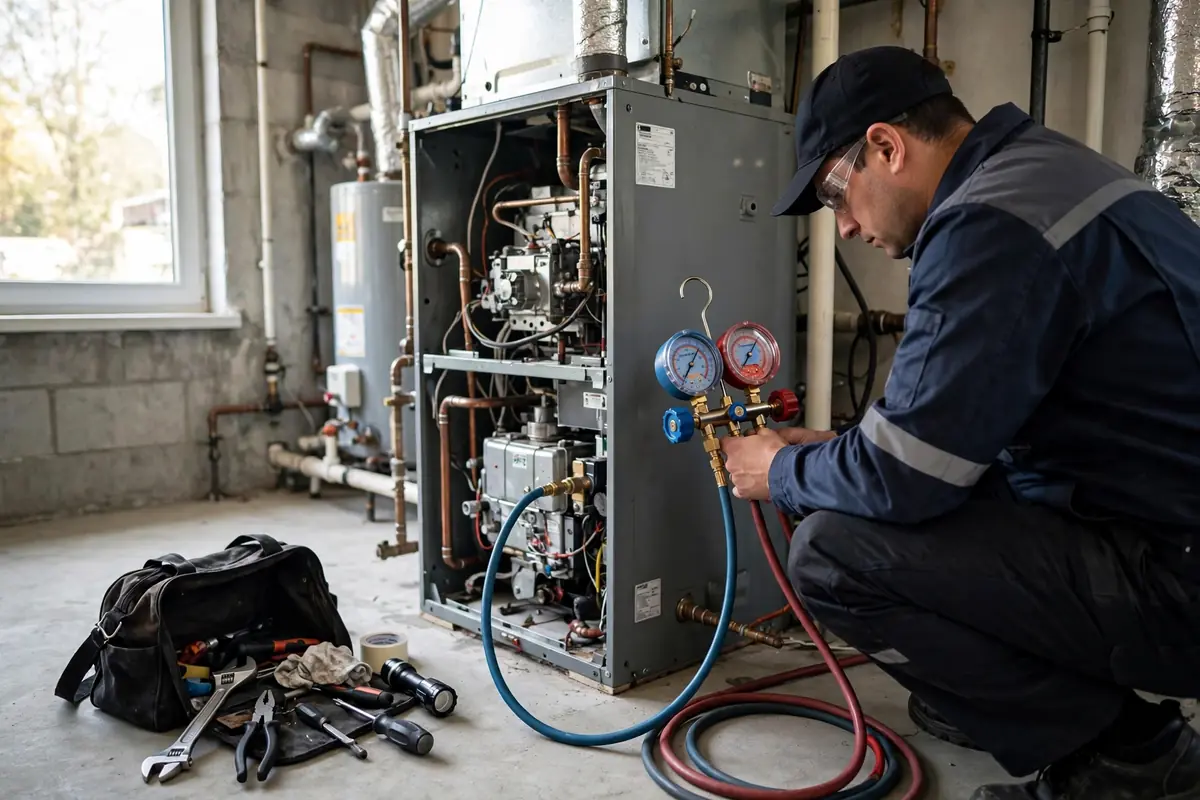
Furnaces rarely die without warning. They whisper first: a new noise, a smell, a cold spot that wasn't there last winter. This guide translates the symptoms Clarksville homeowners describe most into likely causes and safe next steps, in the same plain language we'd use standing in your hallway. If your symptom matches one of the urgent ones at the bottom, skip the reading and call.
No heat at all
Likely area: thermostat, power supply, or the ignition system.
Do this now: confirm the thermostat is on heat with the setpoint above room temp, try fresh batteries, and check the breaker and the furnace power switch. If those are fine, it's a pro job.
Blowing cold or lukewarm air
Likely area: overheating shutdown, low airflow, or duct issues.
Do this now: check the filter. A clogged filter is the number one cause of weak, cool airflow we see in Montgomery County homes.
Turning on and off every few minutes
Likely area: short cycling from a clogged filter, miscalibrated thermostat, or overheating.
Do this now: replace the filter. If the cycling continues, call before the constant starting and stopping wears out expensive parts.
Banging, squealing, or rattling
Likely area: blower or motor trouble (squeal), delayed ignition (bang), loose panels (rattle).
Do this now: note when the noise happens. A loud bang at startup deserves a prompt call; a rattle may just be a loose access panel.
Burning or dusty smell
Likely area: dust burning off at the season's first startup is normal and should fade within an hour or two.
Do this now: if it persists, smells acrid, or smells like gas or rotten eggs, turn the furnace off. Gas smell means leave and call the gas utility.
Pilot won't stay lit / won't ignite
Likely area: igniter, flame sensor, or a gas supply issue.
Do this now: don't keep resetting it. Repeated failed ignition attempts aren't DIY territory, and a furnace that won't prove flame needs a tech.
Some rooms hot, others cold
Likely area: ductwork, zoning, or airflow balance, especially in older homes with original ducts.
Do this now: make sure supply vents are open and unblocked by furniture. Whole rooms that stay cold point to ducts or airflow.
CO alarm sounding
Likely area: treat as urgent until proven otherwise.
Do this now: get everyone out, call 911 from outside, and don't re-enter until responders clear the home. Then have the furnace inspected before it runs again.
Call right away if you have
No heat during a cold snap, a gas or rotten-egg smell, a sounding CO alarm, water leaking from the equipment, or a burning smell that doesn't fade within an hour or two. Those get priority dispatch on our 24/7 line: (931) 800-6452.
A note on Clarksville winters: our furnaces work hardest during multi-day cold snaps when lows sit in the twenties, and ice events cause the power blips that trip systems offline. If your furnace quit right after an outage, check the breaker and thermostat before anything else. Many of the furnace services we perform start with exactly that call, and our cost guide explains what repairs typically involve.
Good To Know
Furnace Problem Questions
My furnace stopped suddenly. What is the first thing to check?
Three safe checks: the thermostat (heat mode, setpoint above room temp, fresh batteries), the breaker for the furnace, and the furnace's power switch, which looks like a light switch and is often on the wall near the unit. Also check the filter, since a severely clogged filter can shut a furnace down. If all of those are fine, call a pro.
Is my furnace problem an emergency?
Treat it as one if you have no heat during a cold snap, smell gas or rotten eggs, hear your carbon monoxide alarm, see water leaking from the equipment, or notice a burning smell that doesn't fade. Those get priority dispatch on our 24/7 line. A furnace that runs but heats unevenly can usually wait for a scheduled visit.
Why does my furnace keep turning on and off?
That is short cycling, and the usual suspects are a clogged filter, a miscalibrated thermostat, an overheating furnace, or a failing flame sensor. Start with the filter. If a clean filter doesn't fix it, call before the constant starting and stopping wears out expensive parts.
Can I fix my furnace myself?
Some checks are safe for homeowners: replacing the filter, checking the thermostat and breaker, making sure vents are open and unblocked, and confirming the furnace switch is on. Anything involving gas, electrical components, burners, or the heat exchanger belongs to a professional. When in doubt, call.
How should I describe the problem when I call?
Tell us what the furnace does and doesn't do, when it started, and what you notice: sounds, smells, what the thermostat display shows, and whether the breaker has tripped. Those details tell us where to start and whether you need emergency or scheduled service.
Further reading: the Air-Conditioning, Heating, and Refrigeration Institute (AHRI) certifies heating equipment performance, and the U.S. Department of Energy explains current residential furnace efficiency standards.
Clarksville HVAC Repair Pro
Found Your Symptom? Let's Fix It.
Describe what your furnace is doing and we'll take it from there: real diagnosis, upfront pricing, no pressure.