Furnace Ignition Repair in Clarksville, TN
Furnace clicking but not lighting, or lighting then dying seconds later? That's almost always the ignition system: the hot-surface ignitor, the pilot assembly, or the flame sensor. We test each one and fix the actual fault.
Same-day diagnosis · Mon–Fri 7AM–7PM · 24/7 emergency dispatch
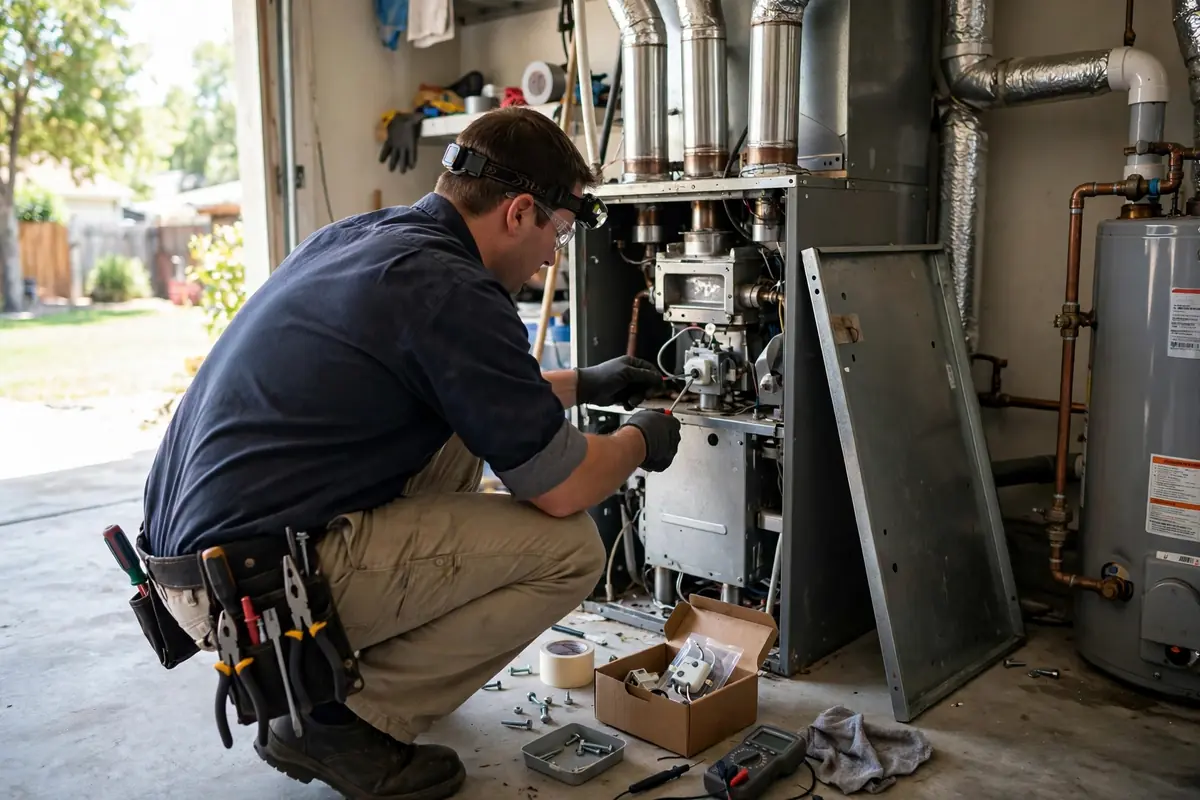
Won't Light? Won't Stay Lit?
The Three Parts Behind Every "Won't Start" Call
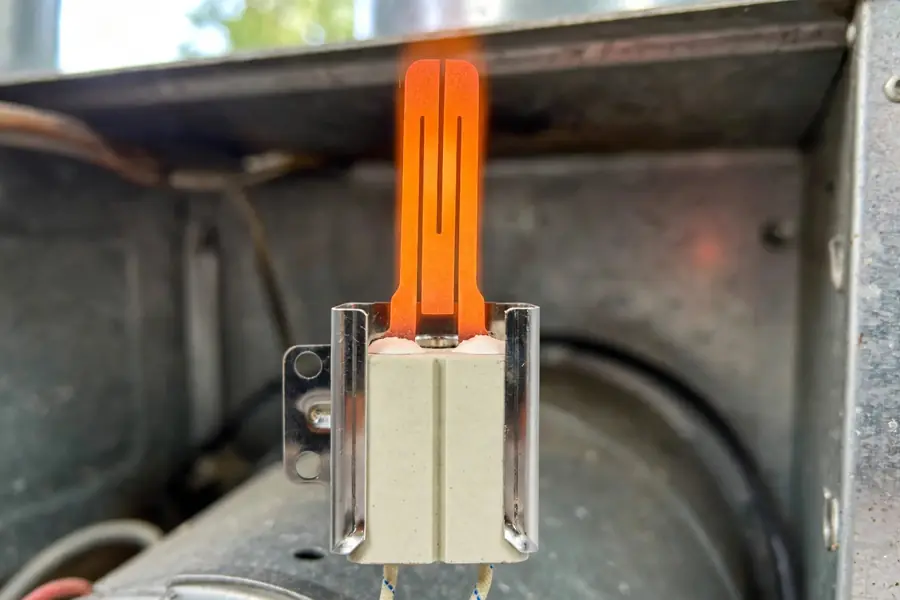
Direct answer: when a gas furnace won't light or won't stay lit, the culprit is almost always one of three parts. The hot-surface ignitor glows to light the gas. The flame sensor confirms the flame is actually there. And on older units, the pilot light assembly keeps a small standby flame. When any of them fails, you get the same frustrating result: no heat.
When we get a call about ignition trouble, we run the startup sequence and watch where it breaks. If the ignitor never glows, we test it for continuity; a cracked ignitor is a common find, and it's a straightforward replacement. If the burners light and then die within seconds, that's the textbook dirty flame sensor: the board sees no flame confirmation and shuts the gas off as a safety response. A careful cleaning usually brings the sensor's signal right back. If the pilot won't stay lit on an older furnace, we check the thermocouple, the pilot orifice for debris, and the gas pressure.
Here's some honest context for Clarksville homeowners. Ignitors are wear items, typically lasting three to seven years, and they fail faster on furnaces that short-cycle. Our region's rapid 30-degree temperature swings in a single day make furnaces cycle hard, which is why ignition calls spike here during shoulder seasons. Downtown's older housing stock still has plenty of standing-pilot furnaces, and we service those too, but if a pilot system needs a major repair, we'll walk you through whether a modern electronic-ignition upgrade makes more sense. Our DIY troubleshooting guide covers the safe checks you can run before we arrive.
How We Fix Ignition Problems
- Sequence testing: we watch a full heat call and pinpoint exactly where ignition breaks down.
- Ignitor testing and replacement: continuity and amperage checked; cracked or weak ignitors replaced with the correct part.
- Flame sensor cleaning or replacement: polished first, replaced only if the signal stays weak or the sensor is damaged.
- Pilot assembly service: thermocouple testing, pilot orifice cleaning, and gas pressure verification on older units.
- Gas valve verification: confirming the valve opens on command and delivers steady pressure.
- Control board check: if every part tests good, we verify the board is sending the right signals in the right order.
Cleaning vs. Replacement: Our Honest Call
We clean when cleaning works. A flame sensor with surface oxidation almost always comes back to life with a careful polish, and there's no reason to sell you a part you don't need. But a hot-surface ignitor with a visible crack, or one that tests out of spec, will fail again soon if we leave it. Replacing it now costs less than a second no-heat call on the coldest night of the year. That's the kind of math we lay out plainly: what's cheapest today versus what's cheapest this winter.
One safety note that matters: if you ever smell gas around the furnace, don't keep trying to light it. Leave the house and call the gas company or 911 from outside. For everything short of that, furnace repair covers the full diagnostic, and emergency service is there when the house is going cold fast.
Don't Ignore These
Ignition Symptoms We See Every Week
Clicking, but no flame
You hear the furnace trying, but the burners never catch. Usually a worn ignitor or a gas valve that isn't opening. This won't fix itself, so call before a cold snap makes it urgent.
Lights, then dies in seconds
Flame for a few seconds, then shutdown, then it tries again. The classic dirty flame sensor pattern. Quick to diagnose and often fixed with a cleaning.
Pilot keeps going out
On older furnaces, a pilot that won't stay lit points to the thermocouple, a dirty pilot orifice, or draft issues. Repeated outages always deserve a technician's eyes.
Upfront & Simple
How an Ignition Repair Visit Runs
Watch the Sequence
We run a heat call and observe: does the ignitor glow, does gas flow, does flame hold? The failure point tells us where to test.
Test, Don't Guess
Ignitor continuity, flame sensor microamps, gas valve voltage, and pressure readings. Numbers decide the diagnosis.
Clean or Replace
Sensors get cleaned when that restores them. Failed ignitors and thermocouples get replaced with the correct OEM-style part.
Prove the Fix
We cycle the furnace several times and verify steady ignition before we leave, so you're not calling us back tomorrow.
Our Commitments
Diagnosis First, Parts Second
We find the real fault
Ignition symptoms overlap: a bad sensor and a bad board can look alike. We test in sequence so you pay for the right part, not a parts-swapping spree.
Common parts on the truck
Ignitors, flame sensors, and thermocouples for common models ride with us, so most ignition calls are fixed in a single visit.
Upfront price, always
You hear the diagnosis and the price before any work starts. Nothing gets replaced without your go-ahead.
Honest Pricing
What Your Symptom Usually Means
This table is a starting point based on what we see in the field, not a remote diagnosis. Your furnace still needs hands-on testing to be sure.
| What you notice | Often the cause | Typical fix |
|---|---|---|
| Clicking or humming, burners never light | Worn hot-surface ignitor | Test and replace the ignitor |
| Burners light, then shut off within seconds | Dirty or weak flame sensor | Clean the sensor; replace if signal stays low |
| Pilot lights but won't stay lit | Failing thermocouple or dirty pilot orifice | Clean orifice; test and replace thermocouple |
| No click, no glow, nothing happens | Thermostat, power, or control board issue | Trace the call for heat step by step |
| Burners light after a loud delayed boom | Dirty burners or weak ignition | Clean burners; test ignition components |
Ignition repairs are usually among the more affordable furnace fixes. Industry estimators put a typical ignitor replacement in the $150 to $300 range, and flame sensor cleanings cost far less. What moves the price is mostly access and whether the control board is involved, which is rarer. Our furnace cost guide has the full picture.
Where We Work
Ignition Repair Across Clarksville
Fast ignition diagnosis throughout Montgomery County, including:
Downtown Clarksville
Historic homes near Franklin Street with older furnaces, including standing-pilot units we know well and service regularly.
Woodlawn
Rural-edge homes on larger lots where a no-heat call means a long cold wait. We prioritize getting ignition failures fixed same-day.
All Service Areas
See every Clarksville-area community we serve across the 37040–37044 ZIPs.
Good To Know
Furnace Ignition FAQs
Why does my furnace click but never light?
Clicking with no flame usually means the ignitor is trying but failing. The most common causes are a worn hot-surface ignitor that no longer gets hot enough, a dirty flame sensor shutting the gas off, or a gas valve that is not opening. A technician tests each in sequence rather than guessing.
Can a flame sensor be cleaned instead of replaced?
Often, yes. A flame sensor coated in oxidation or soot can usually be polished clean with fine abrasive, which restores its signal. If the sensor is cracked, heavily corroded, or the signal stays weak after cleaning, replacement is the right call. Cleaning is a quick job; replacement is still inexpensive compared to most furnace repairs.
How long do hot-surface ignitors last?
Typically 3 to 7 years depending on the furnace and how often it cycles. They are wear items, like brake pads on a car. Frequent short-cycling, which happens a lot during Clarksville's rapid temperature swings, wears them out faster because each cycle is one more heat-up and cool-down.
My old furnace has a pilot light. Should I upgrade it?
Standing pilot furnaces still run fine in many downtown Clarksville homes, and we service them. But they burn gas around the clock, even in summer. When a pilot system needs a major repair, it is worth comparing the fix cost against a modern electronic-ignition furnace, which only uses gas when heating.
Is it safe to relight my furnace pilot myself?
If your furnace has manufacturer instructions printed on it and you follow them exactly, relighting a pilot is a normal homeowner task. But if you smell gas at any point, stop, do not touch any switches, leave the house, and call the gas company or 911 from outside. Repeated pilot outages mean something is wrong and need a technician.
Why does my furnace light, then shut off after a few seconds?
That pattern, flame for a few seconds then shutdown, is the classic dirty flame sensor symptom. The control board lights the burners, the sensor fails to confirm flame, and the board shuts the gas off as a safety response. Cleaning the sensor usually fixes it.
Clarksville HVAC Repair Pro
Furnace Won't Light? We'll Find Out Why
Same-day ignition diagnosis across Clarksville. One call and a real tech is on the way.
Independent References
For background on furnace efficiency and components, see the DOE guide to residential furnace efficiency and the ACCA contractor locator for finding qualified heating contractors.