Furnace Troubleshooting
Furnace Troubleshooting: 7 Safe Checks Before You Call
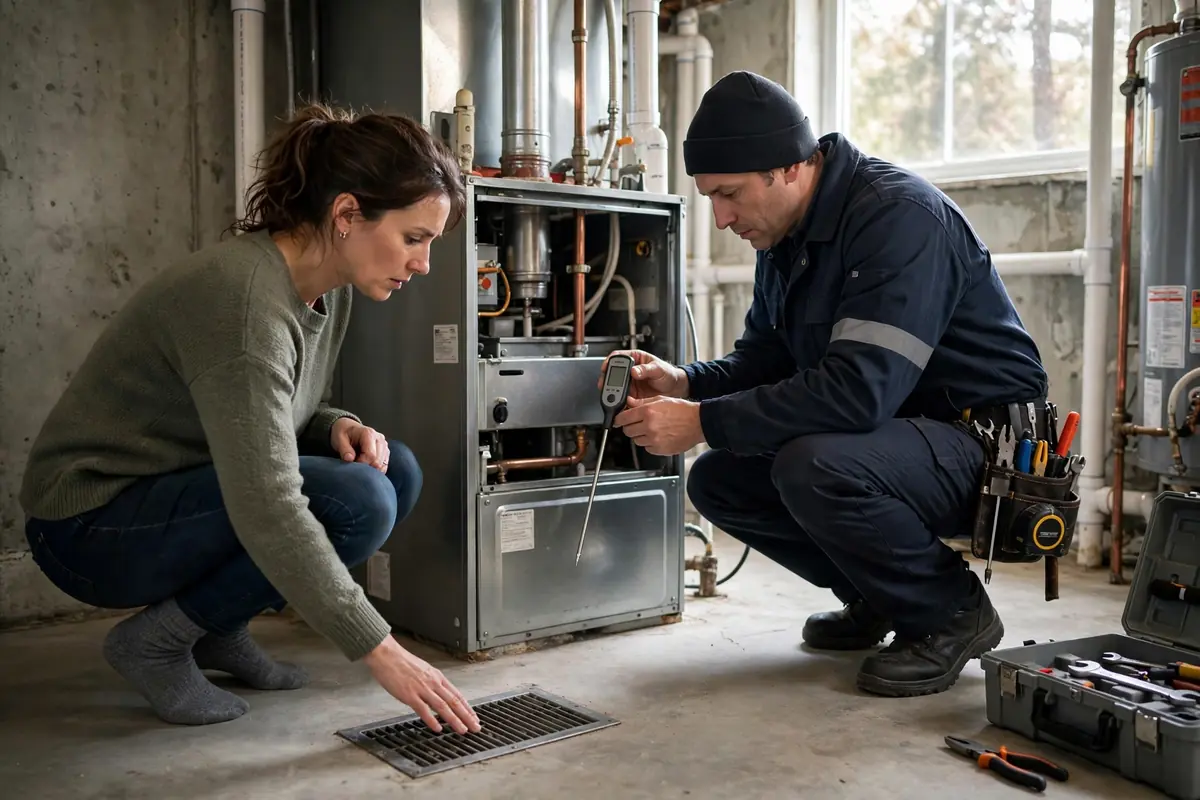
A dead furnace does not always need a repair. These seven checks are all safe for any homeowner, take about fifteen minutes total, and fix a surprising share of the no-heat calls we get. Work through them in order. If none of them brings the heat back, you have done useful diagnosis, and a tech will take it from there.
The Stop Rules (Read First)
Skip every check below and call for help if any of these are true: you smell rotten eggs or gas, you smell burning plastic or electrical odors, there is water pooling around the furnace, or the furnace is making loud banging or screeching sounds. Those are not troubleshooting situations. For gas smells, leave the house and call your gas utility first. For the rest, call us at (931) 800-6452.
One more boundary: nothing in this guide involves opening the furnace access panels, touching gas lines, or working with wiring. Those jobs belong to a tech, full stop.
Check 1: Thermostat Settings
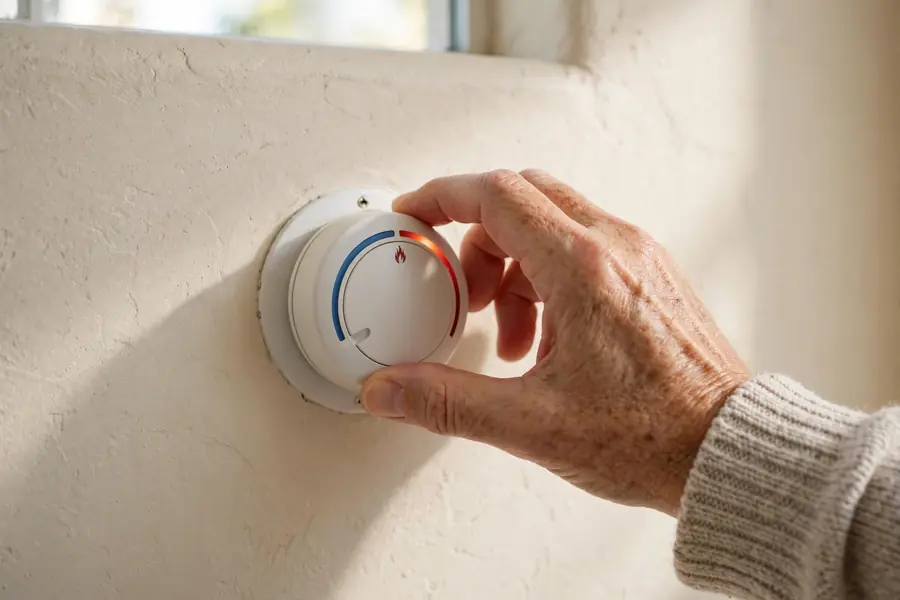
Confirm three things: the thermostat is in HEAT mode, the setpoint is a few degrees above the current room temperature, and the fan is set to AUTO, not ON. Replace weak batteries if the display is dim. This sounds too simple to matter, but mode mix-ups after summer and dead batteries account for plenty of "broken" furnaces.
Check 2: Air Filter
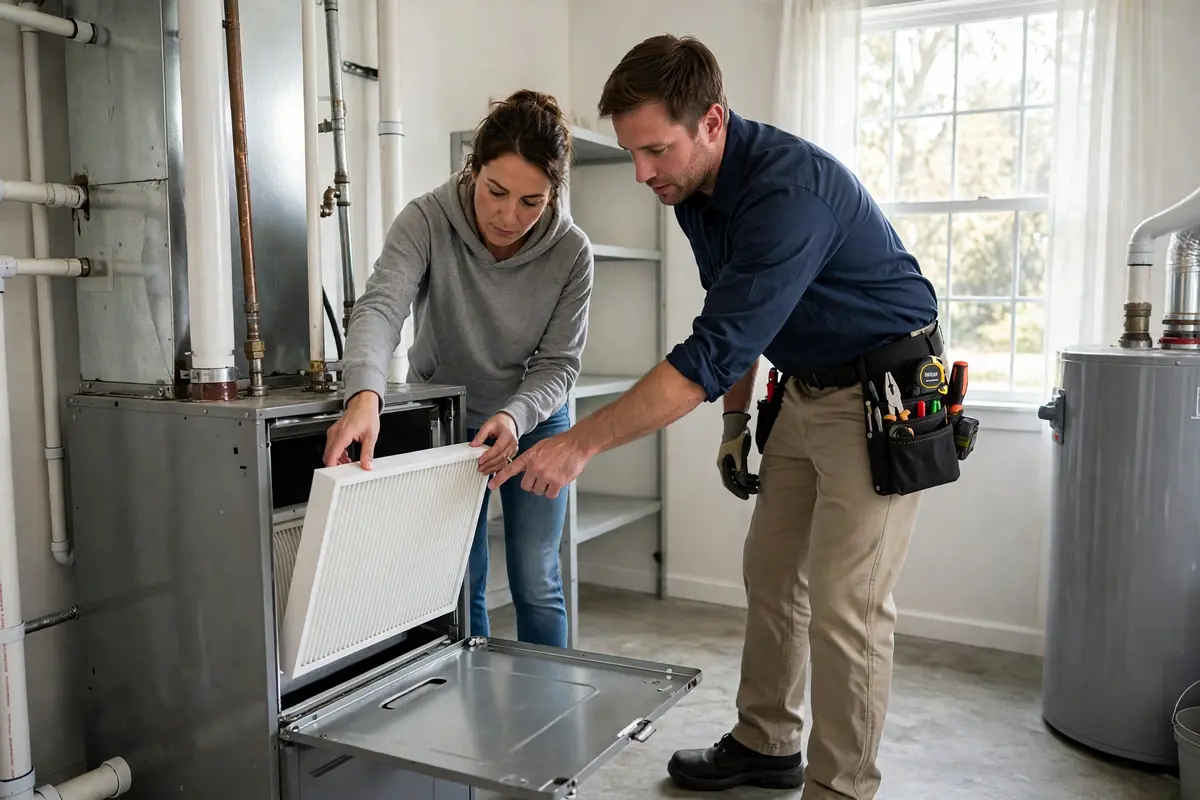
Pull the filter and hold it to a light. If you cannot see light through it, replace it. A clogged filter can trip the furnace's overheat safety and shut the whole system down. Keep a spare on hand during heating season so this is a two-minute job, not a supply run.
Check 3: Furnace Switch and Breaker
Near the furnace there is usually a power switch that looks like an ordinary light switch, sometimes with a red cover. Make sure it is ON; these get bumped off during storage moves or by curious kids. Then check your breaker panel for a tripped breaker labeled furnace or HVAC. If the breaker trips again right after you reset it, leave it off and call a tech. A breaker that will not stay on is protecting you from an electrical fault.
Check 4: Vents and Registers
Walk through the house and open every supply register, and make sure return grilles are not blocked by furniture, rugs, or drapes. Severely restricted airflow can shut a furnace down the same way a clogged filter does.
Check 5: Condensate Drain
If you have a high-efficiency furnace, it produces water as it runs, and that water drains through a small line or into a condensate pump. When the drain clogs or the pump's float switch trips, the furnace shuts itself off to avoid flooding. Look for standing water around the furnace or a full pump reservoir. You can clear a visible clog at the drain opening, but if water keeps backing up, that is a service call.
Check 6: One Power Cycle
Using the furnace switch or the breaker, turn the power off, wait a full minute, and turn it back on. This clears transient control board faults the same way restarting a computer does. One cycle only. If the furnace fails again after a single reset, stop resetting it. Repeated resets mask real problems like overheating or ignition failure.
Check 7: Read the Error Code
Many furnaces have a small sight glass on the access panel with a blinking LED behind it. Count the blinks and note the pattern, then find the code chart printed inside the furnace door or in the manual. Write the code down. When you call us, that code points straight at the fault and often lets us bring the right part on the first trip. Do not open the panel to get a better look; the sight glass is there so you do not have to.
| Check | If it fixes it | If it doesn't |
|---|---|---|
| Thermostat settings | Heat returns within minutes | Move to check 2 |
| Air filter | Airflow and heat return | Move to check 3 |
| Switch and breaker | Furnace powers up | Move to check 4 (or call if breaker re-trips) |
| Vents and registers | Even heat returns | Move to check 5 |
| Condensate drain | Furnace stays running | Move to check 6 |
| One power cycle | Fault clears | Move to check 7, then call |
| Error code | You have a diagnosis to report | Call with the code in hand |
When the checks run out, that is what we are here for. Our furnace repair visits start with a full diagnostic and an upfront price before any work begins. If the house is cold and it is the middle of the night, our emergency furnace repair line is answered 24/7. And if your troubleshooting pointed at ignition parts, our furnace ignition repair page explains what we test and replace. The EPA's indoor air quality guidance is also worth a look for keeping combustion equipment and ventilation working together safely.
What should I check first when my furnace stops working?
Start with the thermostat: confirm it is in HEAT mode, the setpoint is above room temperature, and the fan is on AUTO. Then check the air filter and the furnace power switch and breaker. Those three checks resolve a large share of no-heat calls.
Is it safe to reset my furnace myself?
One power cycle using the furnace switch or breaker is safe. If the furnace fails again after a single reset, stop resetting it. Repeated resets can mask overheating or ignition problems and let damage continue. Call a technician instead.
Should I open the furnace access panel to look inside?
No. Behind the access panels are gas connections, high-voltage components, and hot surfaces. You can read an error code through the small sight glass on many furnaces, but leave the panels on and let a tech do the rest.
What furnace problems should never be DIY?
Anything involving gas lines or the gas valve, electrical wiring or the control board, burners and ignition parts, and the heat exchanger. Also stop immediately and call for help if you smell gas, burning plastic, or see water around the unit.
My furnace has a blinking red light. What does it mean?
It is an error code. Count the blinks and note the pattern, then check the code chart usually printed inside the furnace door or in the manual. Write it down and tell your technician when you call; it points straight at the fault and speeds up the repair.