Blower Motor Repair in Clarksville, TN
Weak airflow, rooms that won't warm up, or a furnace that's suddenly loud? The blower assembly moves every bit of heat in your home. We test the motor, capacitor, and wheel, and fix what's actually wrong.
Airflow tested with instruments · Mon–Fri 7AM–7PM · 24/7 emergency dispatch
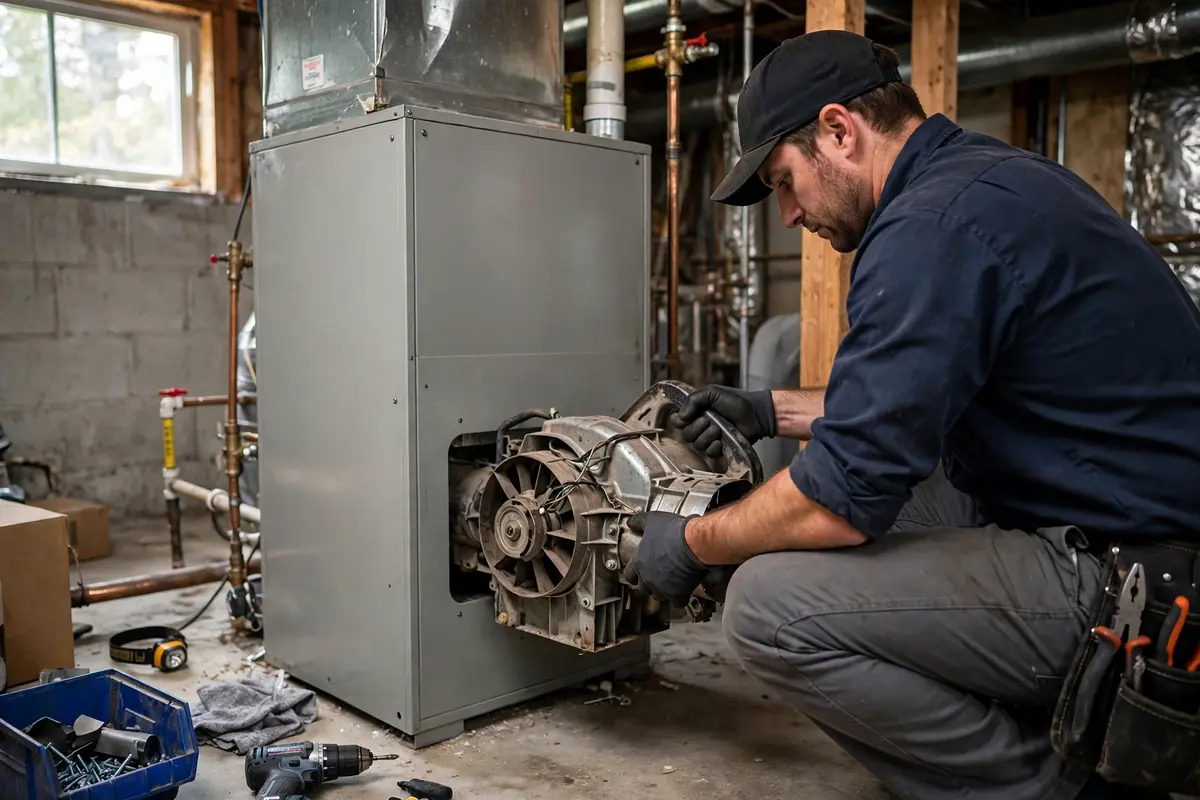
Airflow Is Everything
Your Furnace Makes Heat; the Blower Delivers It
Direct answer: if your furnace runs but the air from the vents feels weak, or some rooms stay cold while the furnace never stops, the blower assembly is the prime suspect. The blower motor, its capacitor, and the blower wheel work together to push heated air through your ducts. When any of them falters, comfort drops even though the burners are doing their job.
When we get a call about weak airflow, we start with the simple stuff: filter condition and return-air blockages, because a clogged filter strangles a blower just as effectively as a bad motor. Then we measure. Motor amperage tells us if the motor is straining or dying. A capacitor test takes minutes and saves real money, because a weak capacitor is one of the most common causes of a humming motor that won't start, and it costs a fraction of a motor replacement. We also inspect the blower wheel itself. Years of dust cake the blades, throw the wheel out of balance, and cut airflow dramatically. Sometimes a thorough cleaning is the whole fix.
There's a second, smaller motor worth knowing about: the inducer draft motor. It pulls combustion gases through the heat exchanger and out the vent before the burners light. When it fails, the furnace won't start at all, and you'll often hear grinding or whining from the top of the unit first. We service those too. If airflow problems have you wondering about the bigger picture, our article on furnace short cycling explains how restricted airflow makes furnaces cycle on and off, and our tune-up visit includes a full airflow check.
How We Fix Blower Problems
- Airflow diagnosis first: filter, returns, and duct restrictions ruled out before we touch the motor.
- Capacitor testing: replaced when weak, because it's the cheapest fix that solves the most "dead motor" calls.
- Motor amperage and bearing checks: we confirm the motor is actually failing before quoting a replacement.
- Blower wheel cleaning and balancing: dust-caked wheels get cleaned; damaged wheels get replaced.
- Inducer draft motor service: bearings, pressure switch proving, and venting checked together.
- Correct motor matching: replacement motors matched to your furnace's specs, including ECM module programming where applicable.
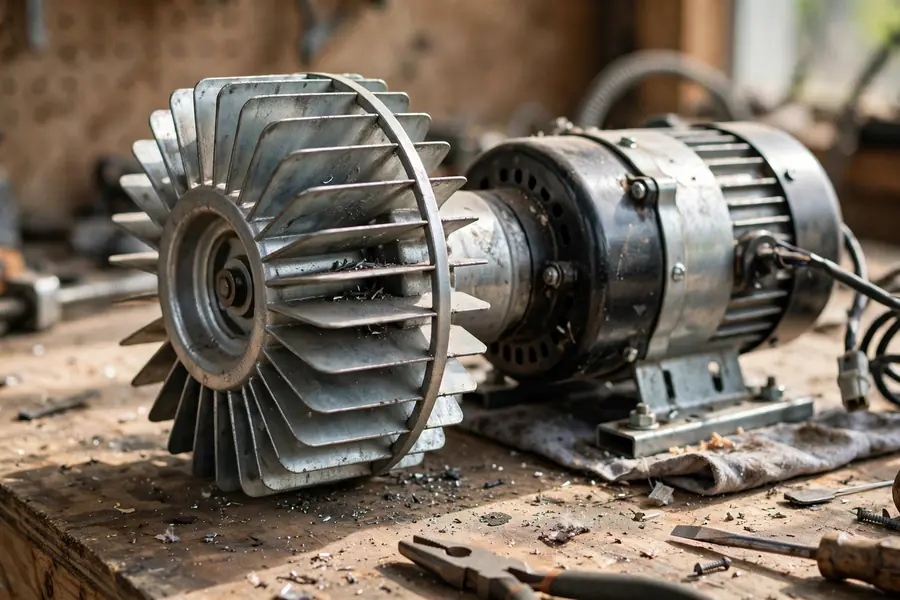
ECM vs. PSC: What You Have and Why It Matters
Older furnaces usually have PSC motors: simple, rugged, single or multi-speed, and relatively inexpensive to replace. Newer high-efficiency furnaces use ECM motors, which vary their speed electronically to match demand. ECMs use noticeably less electricity and keep temperatures more even, but they cost more and their control modules are model-specific. When we quote a blower replacement, we identify which type you have and explain your options in plain terms, including whether a failing ECM on an aging furnace tips the math toward replacement instead.
A word of caution about weak airflow: don't ignore it. Low airflow makes the heat exchanger run hotter than designed, tripping the high-limit safety over and over. Repeated overheating stresses the exchanger, and that's the part you never want to damage. A blower fix now protects the most expensive component in the furnace.
Don't Ignore These
Blower Symptoms We Diagnose Weekly
Weak air from the vents
The furnace runs, but barely any air moves. Check the filter first, then call us. Could be the capacitor, the motor, or a wheel caked in dust.
New humming or squealing
Humming without startup often means a weak capacitor. Squealing usually means bearings. Rattling can be a wheel out of balance. Each sound points somewhere specific.
Furnace overheats and shuts off
If the system runs a while, then cuts out and restarts later, low airflow may be tripping the high-limit safety. This one deserves prompt attention.
Upfront & Simple
How a Blower Repair Visit Runs
Airflow First
Filter, returns, and registers checked. We rule out the simple restrictions before testing a single electrical part.
Electrical Tests
Capacitor microfarads, motor amperage, and voltage at the motor. The numbers tell us whether it's the capacitor, the motor, or the controls.
Mechanical Inspection
Blower wheel pulled and inspected for dust buildup, cracks, and balance. Bearings checked by hand and by ear.
Repair & Verify
Clean, repair, or replace, then measure airflow and temperature rise to prove the system is moving air the way it should.
Our Commitments
We Fix the Cause, Not Just the Noise
Capacitor tested before motor quoted
Too many motors get replaced when a $20 part was the problem. We test the cheap fix first, every time.
Airflow proven with readings
After the repair, we measure temperature rise and check airflow so you know the fix worked, not just that it's quieter.
Honest repair-vs-replace math
Blower motors are pricier repairs. On an older furnace, we'll show you both the repair price and the replacement option.
Honest Pricing
PSC vs. ECM Blower Motors: A Plain Comparison
| Feature | PSC motor | ECM motor |
|---|---|---|
| Speed control | Fixed speeds (usually 1–3) | Continuously variable |
| Electricity use | Higher | Noticeably lower |
| Comfort | Good | More even temperatures, quieter |
| Replacement cost | Lower | Higher; modules are model-specific |
| Common in | Older and basic furnaces | Newer high-efficiency furnaces |
What moves the price of a blower repair? The motor type is the biggest factor: PSC replacements are straightforward, while ECM motors and modules cost more and must match your exact model. Accessibility matters too, and so does whether the wheel needs replacing along with the motor. Industry estimators put blower motor replacements in the $400 to $1,200 range depending on type, which is why we always test the capacitor first. Our furnace cost guide covers the rest.
Where We Work
Blower Repair Across Clarksville
Airflow diagnosis throughout Montgomery County, including:
Rossview
Newer construction near I-24 Exit 8 with modern ECM-equipped furnaces. We stock common modules and capacitors for same-day fixes.
Sango
Growing subdivisions where dust from nearby construction can clog blower wheels faster than expected. Cleaning often restores full airflow.
All Service Areas
See every Clarksville-area community we serve across the 37040–37044 ZIPs.
Good To Know
Blower Motor FAQs
How do I know if my blower motor is failing?
The classic signs are weak airflow from the vents even though the furnace is running, rooms that never quite warm up, and new noises like humming, squealing, or rattling from the furnace cabinet. A motor that overheats and shuts itself off, then restarts later, is another tell. We confirm with amperage readings rather than guessing.
Is it the motor or just the capacitor?
Often it is just the capacitor. A weak capacitor makes the motor hum without starting, start slowly, or overheat. Capacitors are inexpensive and quick to replace, so we always test the capacitor before condemning a motor. Replacing a motor when only the capacitor failed is one of the most common over-repairs in the trade.
What is the difference between ECM and PSC blower motors?
A PSC motor is the older single or multi-speed design: simple, rugged, and cheaper to replace. An ECM motor is electronically controlled and varies its speed to match demand, which uses less electricity and keeps temperatures more even. ECM motors cost more up front but are standard in newer high-efficiency furnaces.
Can a bad blower motor damage my furnace?
Yes, if it runs too long with weak airflow. Low airflow makes the heat exchanger run hotter than designed, which can trip the high-limit safety repeatedly and, over time, stress the exchanger. That is why weak airflow deserves prompt attention rather than a wait-and-see approach.
Why is my furnace so loud all of a sudden?
New noise usually traces to the moving parts: a blower wheel caked with dust and thrown out of balance, worn motor bearings, or a failing inducer fan. Rattling can also be a loose panel or ductwork. We isolate the source by listening at each component with the panels off.
Should I repair the blower or replace the whole furnace?
On a furnace under 12 to 15 years old, a blower motor replacement is usually the right call. On a furnace past 15 years with other wear showing, it is worth comparing the repair against replacement, since blower motors are among the pricier single repairs. We will give you both numbers honestly.
Clarksville HVAC Repair Pro
Weak Airflow? Let's Get It Moving Again
Real airflow testing, honest diagnosis, and most blower repairs done in one visit.
Independent References
For background on efficient heating equipment, see ENERGY STAR's homeowner resources and the Air-Conditioning, Heating, and Refrigeration Institute (AHRI).