Costs & Decisions
Repair vs Replace: How to Decide on Your Furnace
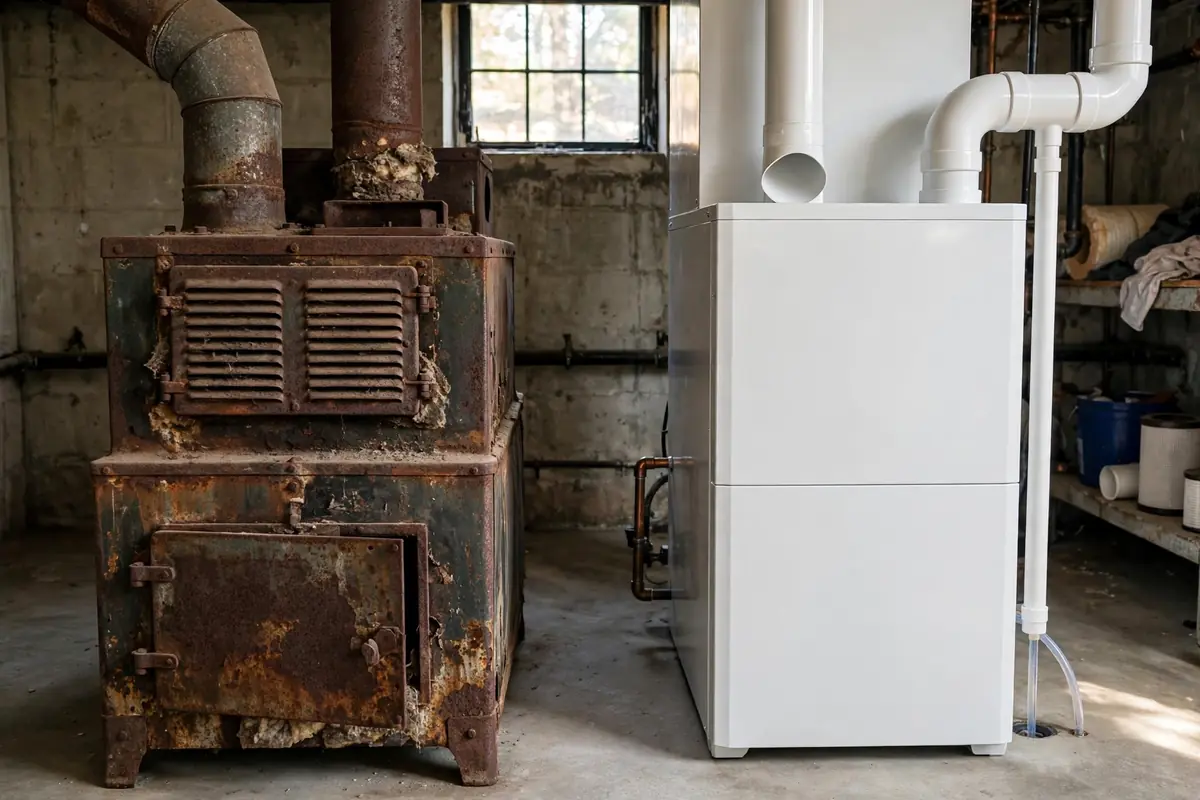
Nobody wants to replace a furnace that had years left, and nobody wants to keep repairing one that is done. Three simple frameworks, used together, give you a clear answer in most cases: the 50% rule, the $5,000 rule, and the 15 to 20 year lifespan test. Add the safety red line below, and the decision usually makes itself.
Three Frameworks That Give You the Answer
Techs use these rules because they work. No single one decides everything, but when two or three point the same direction, you can trust the answer. Run all three before you decide.
The 50% Rule
If a repair costs more than half the price of a new furnace, replace it. A $1,800 repair on a system where replacement runs $4,000 fails the test. A $300 ignitor on the same system passes easily. It is a rule of thumb, not physics, but it keeps you from investing serious money in a system near the end of its life. As a rough reference, third-party national estimates typically put common repairs in these ranges: ignitors $150–$300, blower motors $400–$1,200, and full furnace replacement $4,500–$10,000 depending on size and efficiency. Your actual quote is what counts, which is why we price both options before you decide. Our furnace cost guide breaks down what drives those numbers in Clarksville.
The $5,000 Rule
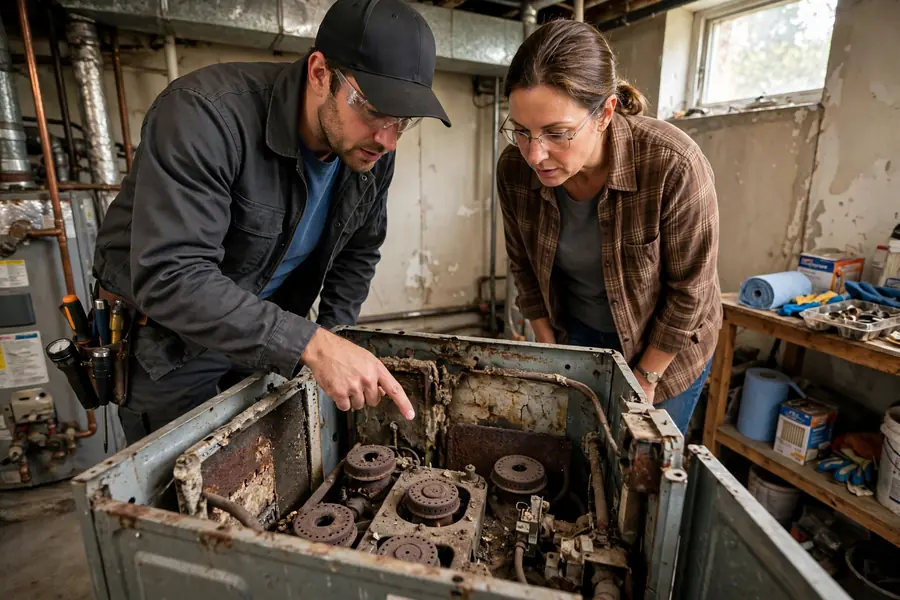
Multiply the repair cost by the furnace's age in years. Over $5,000, lean replace. A $400 repair on a 14-year-old furnace gives $5,600: replace. A $400 repair on a 6-year-old furnace gives $2,400: repair. This rule catches the trap the 50% rule misses, which is a mid-priced repair on an old system that will need another repair next winter. "Multiple breakdowns in the last two winters" is the phrase we hear right before this rule gets applied.
Age, Efficiency, and the 15–20 Year Window
Most furnaces last 15 to 20 years with regular maintenance. Under 10 years, repair is almost always right unless there is a safety issue. Between 10 and 15, run the rules above carefully. Past 15, weigh every major repair against replacement, because efficiency has slipped and other components are aging on the same timeline. Past 20, replacement is usually the better investment even if a repair is technically possible.
Efficiency matters too. Many older Clarksville furnaces run at 80% AFUE or below, while new units reach the mid-90s, and federal standards push new residential gas furnaces to 95% AFUE starting in late 2028. On a cold January with lows in the 20s, that efficiency gap shows up on the gas bill every month. ENERGY STAR's heating equipment resources are a good neutral reference for comparing efficiency ratings.
The Safety Red Line
One finding overrides all the math: a cracked heat exchanger. Cracks can leak carbon monoxide into your home's air, and on older units the exchanger replacement alone often costs close to a whole new furnace. When we confirm a crack, we recommend replacement and we explain exactly why. Our heat exchanger inspection page covers how we test for this. No rule of thumb outranks safety.
| Situation | Lean | Why |
|---|---|---|
| 8-year-old furnace, $250 ignitor | Repair | Passes both rules; years of life left |
| 16-year-old furnace, $900 blower motor | Replace | Fails $5,000 rule ($14,400); near end of life |
| 12-year-old furnace, $1,100 repair | Borderline | Run both rules; consider efficiency gains |
| Any age, cracked heat exchanger | Replace | Safety; repair cost nears replacement |
| Three breakdowns in two winters | Replace | Pattern of failure; reliability matters |
Comfort and Reliability Factors
Math is not the whole story. An aging furnace that still runs can leave you with uneven rooms, constant cycling, and the anxiety of wondering if it survives the next cold snap. In Clarksville, where ice storms can knock out power and a January freeze can sit in the teens for days, reliability has real value. If your furnace has needed furnace repair twice in two winters, factor the next breakdown into the math, because there will probably be one.
When you are ready for numbers, our furnace installation page explains how we size and quote replacements, and we always price the repair option alongside it. For a big decision like this, a second opinion is smart, especially if the first quote felt rushed. Call (931) 800-6452 and we will give you both options with honest math, no pressure either way.
What is the 50% rule for furnace repair vs replace?
If a repair costs more than 50% of the price of a new furnace, replacement is usually the smarter move. It is a rule of thumb, not a law, but it keeps you from pouring money into a system that is near the end of its life.
What is the $5,000 rule for furnaces?
Multiply the repair cost by the furnace's age in years. If the result is over $5,000, replace rather than repair. Example: a $600 repair on a 10-year-old furnace equals $6,000, which points toward replacement.
How long does a furnace typically last?
Most furnaces last 15 to 20 years with regular maintenance. Past 15 years, major repairs deserve a hard look against replacement, because efficiency is lower and other parts are aging too. Past 20, replacement is usually the better investment.
When does a cracked heat exchanger mean replace the furnace?
Almost always. A cracked heat exchanger is a safety issue that can leak carbon monoxide, and replacing the exchanger alone often costs close to a new furnace on older units. Most techs recommend replacement when a crack is confirmed.
Should I get a second opinion before replacing my furnace?
For a big-ticket decision, yes, especially if the first quote felt rushed or pressured. A second tech may find a simpler repair or confirm the replacement recommendation. Call (931) 800-6452 and we will give you a straight assessment with both options priced.